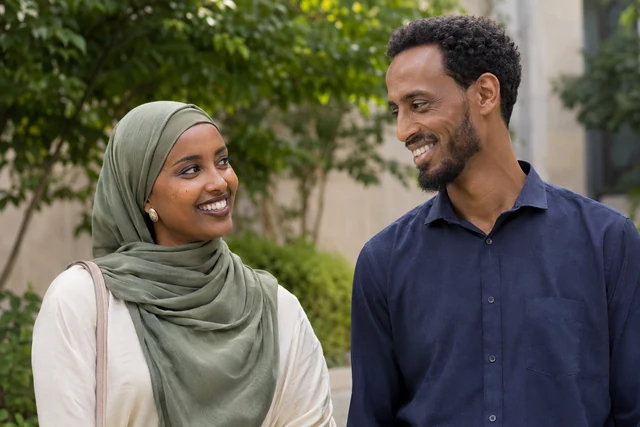
Halal courtship and Muslim Ethiopian dating
Muslim Ethiopian dating refers to the search for a spouse by Ethiopian Muslims, and by people who wish to marry them, in a way that respects Islamic values of modesty, honesty and family involvement. Many people prefer the word courtship to dating, since the aim is marriage and not casual company, and since conversations take place with limits that both people understand.
About 34 percent of Ethiopians were Muslim at the 2007 census, almost all of them Sunni, and many observers believe the share has grown since. Islam is most common in Afar, Somali and parts of Oromia, and in Dire Dawa the 2007 census recorded 70.9 percent Muslim. Islam reached Ethiopia in the early 600s CE, and Sufi-influenced practices such as menzuma devotional chants remain popular.
Because Ethiopian Muslims belong to many ethnic groups and regions, habits vary. A family in Dire Dawa, a young professional in Addis Ababa and a student in London may all describe halal courtship in different ways. Ask your potential spouse what the term means for them, instead of relying on assumptions.
Setting intentions early
State your intention to marry in the first conversations. Many Muslims who look for a spouse expect that a relationship is leading to marriage, and they may withdraw if the purpose is unclear. Speak about faith, family, work and where you would live, and keep your messages respectful and free of physical or sexual references.
Meeting a spouse with family involvement and a wali
Family involvement is central. In Ethiopia, both sets of parents are expected to approve of each other’s families, and elders strongly influence choices, particularly for women. In Islamic marriage, a bride’s guardian, called the wali, is a further requirement or recommended practice. A woman may therefore invite a male relative to be present or to read messages, and a man should treat this as a sign of seriousness.
Unless they are close family, some Muslims would rather not hug people of the opposite gender, and a man ought to let a woman extend her hand first before offering a handshake. If she does not offer a hand, smile, nod and greet her warmly in words. Eye contact, a kind tone and good manners matter more than physical gestures.
Traditional proposals may involve elders, called shimagile, who visit the woman’s family. Some families send a respected community member instead. The family asks about the man’s job, his religion and his habits, and deliberates privately. Not every couple follows this custom exactly, but understanding it helps you speak respectfully to relatives.
Be patient. Approval is rarely instant, and a family that asks many questions is usually protecting its daughter or son. Answer honestly and provide references if asked.
Nikah: the marriage contract in Islam and in Ethiopia
Nikah means to bind, and it is mandatory for a valid Muslim marriage. It is described as a solemn social contract between bride and groom, based on offer, called ijab, and acceptance, called qubul, with the free consent of both. Aqid is the term often used for it among Muslims in Gonder. A study of the Gonder ceremony finds that it combines religious and cultural elements and that its procedures have changed over ten years under cultural and economic pressures.
Two adult witnesses are required, and the contract is signed and announced publicly. A marriage sermon, called a khutba, and the presence of the bride’s guardian are further requirements or recommended practice. The groom gives the bride a gift called mahr, which forms an essential part of the contract. It may be cash, property or goods, paid at the time of marriage, deferred or split, and moderation is recommended.
Ethiopian civil law also matters. The Revised Family Code of 2000 recognises civil, religious and customary marriage, sets 18 as the minimum age for both spouses, requires their free and full consent and says every marriage must be registered, whatever its form. A couple who hold a nikah should check that the marriage is registered and a certificate issued.
Talking about mahr and costs
Discuss mahr openly and kindly. Neither spouse should feel pressed into a figure that causes hardship. Families may expect gifts and a celebration, and costs differ between rural and urban settings. Agree on what is reasonable before the families meet.
Muzz and other platforms for Muslim Ethiopian dating
Muzz is a Muslim marriage app for people genuinely seeking marriage and not casual dating. Selfie verification is required, members accept an Islamic conduct pledge, and sexually explicit content is prohibited. Features include filters for religion and sect, hidden or blurred photos and a chaperone chat transcript option that lets a wali or relative follow a conversation. It is useful for Ethiopian Muslim singles and for those abroad who seek marriage internationally.
Gojo is an app for Ethiopian and Eritrean Habesha singles, with a religion filter and an Incognito Mode. EthiopianPersonals lists singles in Dire Dawa, Harar, Jigjiga, Addis Ababa, Adama and many other places. Its free members can search profiles and show interest, while wider messaging requires a paid plan.
Check the current price in the store before subscribing, and remember that a subscription is managed by the store and continues until you cancel it. Verification confirms that an account passed a check, not that a person is truthful about marital status. Ask for a video call with a family member present, and do not move to private messaging until you trust the person.
Faith in daily life: Ramadan, food and alcohol
Muslim Ethiopians do not drink alcohol as a rule, and cultural guides advise not giving alcohol as a gift to Muslim or Protestant Ethiopians. Choose a cafe or restaurant that suits that preference. For a meal, share from a common platter and eat with the right hand, as in all Ethiopian dining.
Muslims who fast in Ramadan do not eat during the day, so a lunch date makes little sense. In Saudi Arabia, eating, drinking and smoking in public during the day in Ramadan is not allowed. Plan a conversation after sunset or a meeting with relatives, and ask your partner how the family marks the month.
In Ethiopian homes, shoes are removed on entering, and the same applies to mosques. Greet the eldest first and wait to be offered a seat. If you are invited to a coffee ceremony, remember that it is served in three rounds and takes at least an hour.
Living and dating in the Gulf and Kenya
Many Ethiopian Muslims work or live in countries where the law is strict. In Saudi Arabia, sex outside marriage and adultery are illegal, including for tourists, and couples of all kinds are advised to avoid public displays of affection. In Kuwait, an unmarried couple may not live together or share a hotel room, and hotels may ask for a marriage certificate.
In the United Arab Emirates, consensual relations between an unmarried man and woman are generally legal for adults, but a criminal complaint from a spouse or parent can lead to a sentence of six months or longer, and kissing in public can lead to arrest. Civil marriage in Dubai and Abu Dhabi is for non-Muslims only, so Muslim couples marry under the personal status rules that apply to them.
Dating apps are used in these countries but carry legal risk. Keep profile details minimal, avoid saving explicit messages and do not meet privately with someone you do not know. In Kenya, the UK government advises caution when meeting people from dating apps, and it names Eastleigh, the Central Business District, Mathare and Kibera among higher-risk areas for crime in Nairobi.
Safety, scams and a respectful path to marriage
Scammers exploit the wish to marry quickly. They declare strong feelings in days, mention a business abroad or a sick relative and then ask for money. Never send funds, gift cards or cryptocurrency to a person you have not met. Report to the platform and to your national fraud service, such as the FTC in the United States or Action Fraud in the United Kingdom.
Check a prospective spouse through family and community, not only through the screen. Ask relatives to meet them, confirm identity documents when appropriate and ensure that any previous marriage has legally ended, since bigamy is prohibited under Ethiopian law.
Take the time you need. A good match is built on shared values, honest talk and the approval of those who care about you. If you feel pressured, step back and speak to a trusted elder, an imam or a friend.